Bedding · Comfort & Materials
A Better Bed Surface: How to Evaluate Premium Mattress Toppers
A topper can change the feel of a bed without replacing the mattress beneath it. The difference between a thoughtful comfort adjustment and an expensive mismatch comes down to materials, thickness, breathability, fit, and the condition of the mattress itself.
Published November 19, 2026
A mattress is a system, not a single surface. Its support core, comfort layers, cover, foundation, sheets, and pillows all shape the experience of sleep. A mattress topper occupies a small but consequential place in that system: it sits between the sleeper and the mattress, adding a distinct layer of cushioning or changing how warmth and pressure are felt.
That makes a topper useful, but not magical. It may soften a bed that feels too firm, add a little contouring, or bring a different texture to the sleep surface. It cannot reliably correct a mattress that sags, lacks support, or has deteriorated unevenly. Understanding that boundary is the first step in evaluating premium mattress toppers—and in deciding whether one is likely to improve the bed at all.
In a luxury bedding setup, price and presentation can make every detail appear decisive. Yet the best choice is rarely the thickest, softest, or most elaborate option. It is the one that addresses a specific comfort need, works with the mattress underneath, and suits the sleeper’s temperature preferences and care routine.
Start with the mattress, not the topper
Before comparing fills or construction, take stock of the bed as it is. A topper responds to the surface and support beneath it. If the mattress is broadly sound but feels too firm at the shoulders or hips, a cushioning layer may help. If the mattress has a pronounced hollow, a broken support component, or an uneven slope, adding a soft layer may simply mask the problem temporarily while allowing it to remain.
Consider the bed for several nights under ordinary conditions. Notice whether discomfort is concentrated at pressure points, whether the mattress feels different in different areas, and whether the issue changes with sleeping position. Check the foundation too: an unsuitable or damaged base can affect how a mattress performs. A topper is a comfort adjustment, not a substitute for a stable sleep system.
It is also useful to distinguish “firm” from “supportive.” Firmness describes the initial impression at the surface; support concerns how well the bed holds the body in a comfortable, reasonably neutral position. A plush topper can make a firm mattress feel gentler, but excessive cushioning may allow some sleepers to sink too far. The aim is not softness without limit. It is a surface that feels comfortable while retaining the support the mattress is meant to provide.
Thickness changes the scale of the adjustment
Thickness is one of the most visible specifications, but it needs context. A relatively thin pad may add a modest layer of softness or a more substantial textile hand. A thicker topper can create a more noticeable change in contour and cushioning. Neither is automatically superior: the right depth depends on how much the sleeper wants to alter the bed and how the underlying mattress responds.
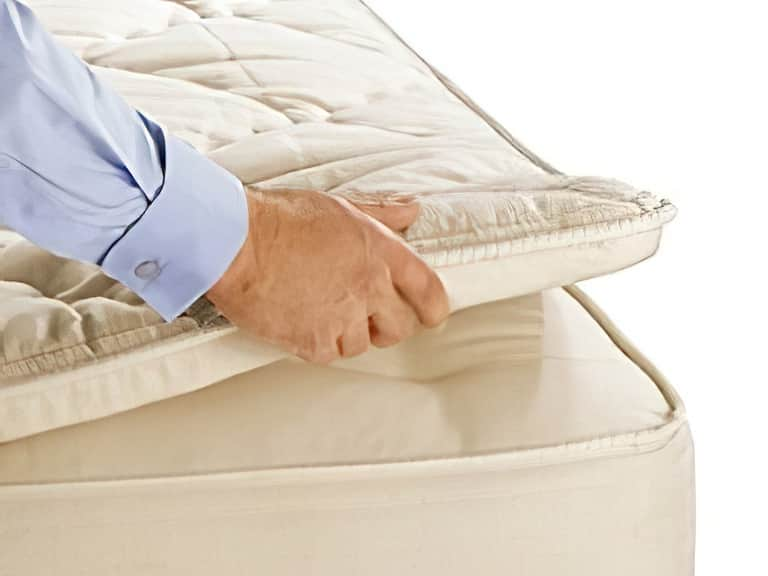
A two-inch latex-and-wool pillowtop pad, for example, represents a substantial comfort layer rather than a simple protective cover. The Royal-Pedic Natural Collection Single Sided 2" Pillowtop Pad is described as combining natural Dunlop latex with untreated French lamb’s wool and a cotton outer fabric. Its construction illustrates how thickness and fill work together: the latex supplies a resilient cushioning layer, while wool contributes a softer, moisture-managing surface. The effect will still depend on the mattress below and on the sleeper’s preferences.
Thickness can influence the practical details of a bed, too. A deeper topper raises the sleeping surface, which may affect how easily someone gets in and out of bed. It can also use up the depth allowed by fitted sheets and mattress protectors. Measure the mattress and consider the combined height of every layer before choosing. A topper that feels promising in isolation may be awkward when it shifts, bunches, or forces the bedding to pull loose.
Understand what the fill is meant to do
The words “premium” and “luxury” do not identify a material or promise a particular feel. A useful evaluation starts with the fill, its construction, and the role it plays. Different materials respond differently to weight, movement, warmth, and routine care. The best choice depends less on prestige than on how those properties meet a sleeper’s needs.
Latex: buoyant cushioning
Latex is often chosen for its responsive feel. Rather than slowly enveloping the body, it tends to compress and spring back more promptly. In a topper, latex can add pressure relief while retaining a sense of lift. It may appeal to people who want cushioning without a deeply sinking sensation, although feel varies with the latex formulation, thickness, and firmness.
When evaluating latex, look beyond a broad material label. Ask whether the description identifies the type of latex, the construction, and the composition of the cover. Certifications may help establish particular material or manufacturing claims, but they do not tell you whether the topper will feel comfortable to you. They are one part of an assessment, not a substitute for specifications or a clear understanding of return and care terms.
Wool: a soft, fibrous layer
Wool is used in bedding for its resilient loft and its ability to manage moisture within the fibers. A wool-filled topper may create a less foam-like feel: softly cushioned, with a more traditional textile character. Wool is not necessarily a dramatic solution for a mattress that is far too firm, because the amount and arrangement of the fill determine how much the surface changes.
Descriptions should clarify whether wool is the primary fill, a quilted component, or part of a blended construction. These distinctions matter. A layer of wool over a resilient core behaves differently from a topper made primarily of loose or quilted fiber. Consider whether the topper can be rotated or flipped, and whether it requires airing, professional cleaning, or a specific method of care.
Down and fiber fills: plushness and loft
Down and synthetic or plant-based fiber fills can create a lofty, cushioned surface. They may be appealing when the goal is a softer feel rather than a major alteration to the mattress’s contouring or support. Loft can compress over time, so construction, fill distribution, and the possibility of regular fluffing are relevant questions. A lofty surface also needs enough depth in the fitted sheet and may feel different after repeated use and laundering.
Memory foam: closer contouring
Although some shoppers use “topper” to mean any added comfort layer, foam options vary widely. Memory foam is generally associated with close contouring, while other foams may feel more responsive. Density, thickness, and ventilation affect how a particular layer performs. Because foam can change the way heat is perceived, temperature preference should be part of the decision rather than an afterthought.
Breathability is about the whole construction
Comfort is not just a question of softness. A surface that feels pleasant at bedtime may become uncomfortable if it traps too much warmth or holds moisture in a way that does not suit the sleeper. Breathability depends on more than the name of a fill. Fiber structure, quilting, cover fabric, layer depth, and the mattress itself all contribute to how air and moisture move through the bed.
Natural fibers such as cotton and wool are often selected for their tactile and moisture-related properties; latex and foam have different structures and can be ventilated or enclosed in different ways. These broad tendencies should not be treated as guarantees. A dense quilted topper, a waterproof barrier, and a tightly fitted sheet can each change the overall feel of the sleep surface.
For a warm sleeper, look for precise descriptions of the cover and fill rather than relying on a general claim that a product is “cooling.” Consider whether the topper adds a thick layer that may reduce airflow or whether the bedding around it can be adjusted. Lightweight, breathable sheets can complement a topper, but they cannot necessarily offset a material or construction that feels too warm for an individual.
Fit determines whether comfort stays in place
A topper can have the right feel and still be frustrating if it moves during the night. Check how it attaches and how its dimensions relate to the mattress. Some designs rest directly on top and are held in place by the mattress pad and fitted sheet; others use elastic straps, a fitted skirt, or a full enclosure. Each approach has trade-offs in ease of setup, stability, and compatibility with deep mattresses.
Measure the mattress length, width, and depth, including any built-in pillowtop or other permanent comfort layer. Then compare those measurements with the topper’s stated size and the usable pocket depth of the fitted sheet. A mattress with a deep profile may require specially sized bedding. Conversely, a thin topper under a loose sheet can slide or wrinkle if it is not anchored securely.
Fit also involves the edges. A topper that is too narrow can leave parts of the mattress uncovered, while one that overhangs may create an uneven border. If the sleeper shares the bed, movement on one side can reveal whether the topper stays aligned across the full surface. The practical test is simple: after making the bed, the layer should lie flat and remain so through normal use.
Care and longevity belong in the comparison
Premium bedding is an investment in materials and construction, but its useful life depends in part on how it is maintained. Before choosing a topper, read the care instructions carefully. Some covers can be removed and washed; other constructions may require spot cleaning, airing, or professional care. A product that cannot be machine washed is not necessarily a poor choice, but the care routine should be realistic for the household.
Use a mattress protector only if it is compatible with the topper and does not compromise the fit or feel. A protector can help limit exposure to spills, perspiration, and everyday soil, but an impermeable layer may affect breathability. The full arrangement matters: mattress, topper, protector, and sheets should work together rather than compete for space or alter the surface in an unwanted way.
Follow the maker’s guidance on rotation, airing, and cleaning. Avoid assuming that a topper can be flipped; some are designed for one-sided use, while others may have different surfaces or construction on each side. If a layer develops persistent lumps, loses loft unevenly, or no longer lies flat, those changes may signal that it is no longer delivering the intended comfort.
Use specifications, but judge the sleep experience
Specifications are useful for narrowing choices, not for predicting a perfect match. Thickness, fill type, cover composition, attachment method, and care instructions are concrete details. Labels such as “plush,” “cloud-like,” or “hotel comfort” are less precise. They may communicate a general intention, but they do not establish how a topper will feel beneath a particular body on a particular mattress.
If an in-person assessment is possible, pay attention to the whole bed rather than pressing a hand into the topper. Lie in the usual sleep position and notice whether the surface feels comfortable at the shoulders, hips, and other pressure points. Check whether changing position feels easy, whether the bed still seems supportive, and whether the edges remain stable. A brief test cannot replicate an entire night, but it can reveal obvious mismatches.
When buying without an in-person test, understand the return policy and any trial conditions before making a decision. Clarify whether the topper can be returned after opening, who pays for return shipping, and whether packaging or sanitation rules apply. Also check the warranty’s scope: a warranty may address manufacturing defects without guaranteeing that the feel will suit every sleeper.
A practical evaluation checklist
Before choosing among luxury toppers for beds, reduce the decision to a few specific questions. This keeps attention on the role the topper must play instead of on adjectives or price alone.
- What is the problem? Is the mattress too firm at the surface, too warm, or simply in need of a different texture?
- Is the mattress still supportive? A topper is not a dependable remedy for sagging, damage, or a failing foundation.
- How much change is wanted? A thin pad and a thick cushioning layer produce different degrees of adjustment.
- Which fill suits the preferred feel? Compare contouring, resilience, loft, and the way each material handles movement.
- Will the construction suit the sleeper’s temperature needs? Consider the cover, quilting, overall depth, and all other bedding layers.
- Will it stay in place? Confirm dimensions, attachment design, mattress depth, and fitted-sheet compatibility.
- Is the care routine manageable? Check cleaning, rotation, airing, and any limits on washing or drying.
- Are the trial and warranty terms clear? Know what is covered and what options exist if the feel is not right.
The answer may be a smaller change
Not every bed needs a thick topper. A mattress that is already comfortable may benefit more from a protective pad or better-fitting sheets than from another substantial layer. A protective mattress pad is designed primarily to shield the mattress from everyday wear, while a comfort topper is intended to alter the feel more noticeably. The distinction matters, especially when the mattress already has a carefully balanced construction.
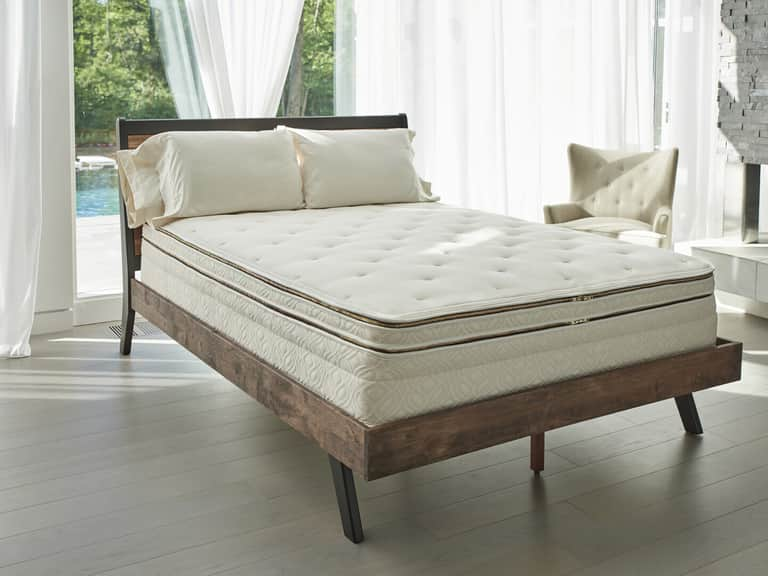
For example, the Vispring Regal Superb is described as a pocket-spring mattress with layers of wool, cotton, and long-stranded horsetail. Its materials and hand-built construction are intended to create a specific combination of resilience, support, and surface comfort. Adding a thick topper to any mattress of this kind would change the experience, not simply preserve it. The question is whether that change addresses a real need.
Where the goal is protection with minimal change in feel, a mattress pad may be more appropriate. Where the surface feels distinctly too firm, a comfort topper may be worth evaluating. Where the mattress has lost its shape, the more durable answer may involve repairing or replacing the underlying bed rather than layering over the symptoms.
A considered layer, not a shortcut
The best premium mattress toppers do not succeed because they promise transformation. They work when their materials and construction make a measured, useful difference to a mattress that remains fundamentally supportive. Thickness establishes the scale of that difference; fill and quilting shape the feel; breathability affects the sleep climate; and fit and care determine whether the improvement remains practical over time.
Start with the bed you have and the discomfort you can actually describe. Then compare the topper’s materials, dimensions, attachment, care requirements, and trial terms against that need. A luxury sleep surface is built from compatible parts. The topper is only one of them—and its value lies in making the whole bed work better, not in asking it to do a mattress’s job.