Bedding · Fit Guide
The Fit Factor: How to Choose Fitted Sheets for Deep Mattresses
A sheet that pulls free at the corners can turn a carefully made bed into a nightly negotiation. The solution is not simply to buy the deepest pocket available. Measure the mattress, count every layer beneath the sheet, and consider how the fabric and elastic work together. A little precision can make the whole sleep surface feel calmer.
There is a small but familiar drama in many bedrooms: a fitted sheet looks smooth at bedtime, then slips from one corner before morning. Or it stays attached but gathers into ridges beneath the sleeper. Sometimes the culprit is a mattress taller than the sheet was designed to cover. Sometimes the mattress is fine, but a topper or quilted pad adds enough height to defeat the elastic. And sometimes the sheet is simply the wrong shape for the bed.
Deep mattresses have become common, while bedding still comes in a bewildering range of pocket depths, cuts, fabrics, and elastic arrangements. “Deep pocket” is not a universal measurement or guarantee. The label tells only part of the story. To find luxury fitted bed sheets that remain smooth and secure, start with the dimensions of the bed as it is actually used—not the height printed on a mattress specification alone.
This guide lays out a practical method: measure the full bedding stack, compare the result with the sheet’s usable pocket depth, check the mattress dimensions, and look closely at construction. The aim is not a perfect showroom corner. It is a dependable fit that stays comfortable through the night and makes laundry day less of a puzzle.
First, measure the bed you sleep on
A mattress measurement is a starting point, not the final answer. If a topper, mattress pad, or protector remains under the fitted sheet, its thickness contributes to the height the sheet must cover. Measure the assembled sleep surface from the bottom edge of the mattress to its highest point, including any layer that will sit beneath the sheet.
Use a flexible tape measure and keep it perpendicular to the floor. Measure near a corner, where the sheet must stretch around the mattress, rather than pressing the tape into a soft surface. If the top layer is compressible, avoid pushing down hard: the relevant figure is the height it presents when the bed is made, not its compressed thickness under pressure.
It helps to write down the pieces separately. Record the mattress height, then the thickness of each pad or topper, and add them together. For instance, a mattress that measures 13 inches with a 1-inch pad creates a stack of roughly 14 inches before the fitted sheet is added. The exact result can vary with quilting, loft, and how a layer settles, so a direct measurement of the finished bed is the best check.
Remember the protector. A thin protector may add little height, but it still occupies space, and its skirt or fabric may affect how the sheet sits. If you routinely switch between a bare mattress and a topper, measure each arrangement. A sheet that fits one setup may be too loose or too shallow for the other.
What pocket depth actually means
Pocket depth generally describes how far the fitted sheet’s corner fabric extends down the side of a mattress. It is a useful number, but manufacturers may describe it differently, and a stated maximum depth does not always mean the sheet will fit every mattress at that height equally well. The mattress’s profile, the sheet’s dimensions, and the amount of stretch all influence the result.
A sheet must cover the top surface and travel down the sides far enough for its elastic edge to anchor underneath. That means a practical fit needs more than a pocket equal to the mattress height. The fabric needs some room to reach under the mattress without being stretched to its limit. How much extra room is appropriate depends on the sheet’s cut and elastic design; there is no single allowance that applies to every brand and material.
Compare your measured stack with the sheet’s stated pocket range, if one is provided. If your stack is near the listed maximum, the sheet may fit tightly, especially on a mattress with rounded, padded, or pillow-top edges. A few inches of additional capacity can make installation easier and reduce stress on the corners. But choosing an excessively deep pocket is not automatically better: too much loose fabric can create slack, folds, and shifting.
When the package gives only a general label such as “deep pocket,” look for a specific measurement on the product information or ask the maker for clarification. The phrase alone is too vague to settle a close fit. A sheet intended for a 15-inch mattress, for example, may not be suitable once a topper raises the total height beyond that figure.
Count every layer, but do not confuse their jobs
Mattress toppers, pads, and protectors are not interchangeable terms. A topper typically adds a more noticeable comfort layer; a pad may add modest cushioning and protection; a protector is primarily a barrier against spills, perspiration, and everyday wear. Their thicknesses vary considerably. Whatever the layer is called, if it sits beneath the fitted sheet, its loft belongs in the measurement.
Consider a tall latex mattress as one example. The Savvy Rest Unity Pillowtop Latex Mattress has a listed height of 13 inches, and its product information notes that most deep-pocket contour sheets will fit. Add a mattress pad, however, and the sheet must accommodate the combined height—not the mattress alone. A different mattress, or a plush topper placed on it, may create a taller stack and require a different pocket range.
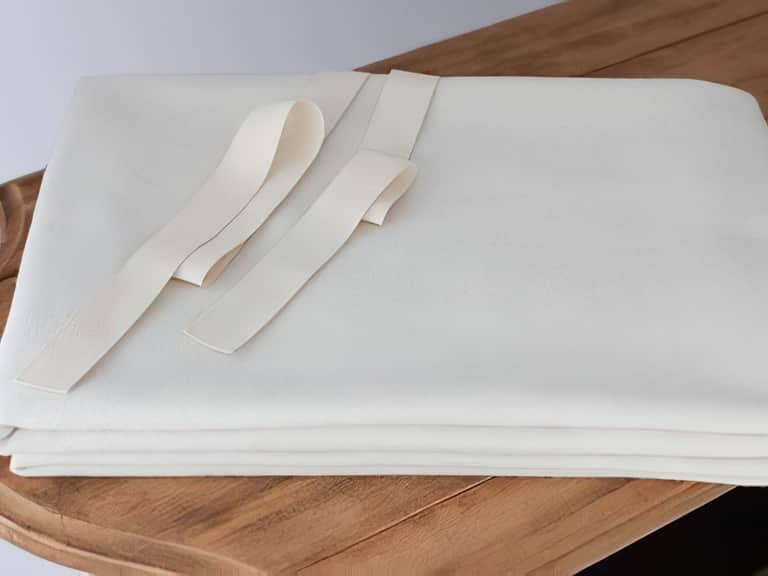
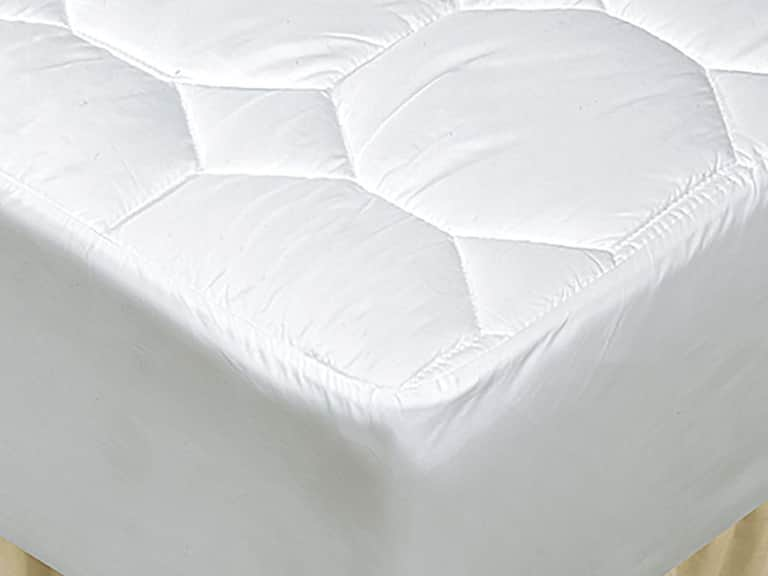
Some accessories make their fit limits especially clear. The DownTown Company Luxury Cotton Mattress Pad, for example, is described with 18-inch deep pockets and a flexible jersey-knit skirt. That number refers to the pad’s fit around the mattress; it is not a fitted sheet specification. If a pad is part of the bed, measure the assembled surface and choose the sheet accordingly. Never assume that an 18-inch pad pocket means an 18-inch fitted sheet will suit the completed stack.
The same distinction matters with ties or corner straps. A pad secured by straps may lie differently from one with a deep skirt, but the straps do not eliminate its thickness. Layer placement also matters: a protector over the mattress and below a topper contributes to the arrangement, even if it adds little height. The best fit comes from measuring what is present, not relying on a product name.
The elastic is the anchor
Two fitted sheets with identical pocket measurements can behave differently because their elastic is constructed differently. Some use elastic only at the corners; others run it around the full perimeter. Some have reinforced corner bands or deeper panels designed to wrap farther beneath the mattress. These details affect whether the sheet stays put, how evenly it stretches, and whether it is easy to pull on.
Full-perimeter elastic can help distribute tension around the mattress and may provide a more secure hold, particularly when the sheet is fitted to the correct dimensions. Corner-only elastic can work well too, but its performance depends on the cut and quality of the fabric. If a sheet repeatedly slips from one corner, inspect whether the elastic has weakened, stretched out, or become twisted before replacing the entire bedding set.
Elastic should hold the sheet in place without forcing the corners into a strained, sharply pulled shape. If the sheet is difficult to install, pops off when the mattress is adjusted, or visibly draws the mattress cover inward, the pocket may be too shallow or the sheet dimensions may be wrong. Conversely, a loose corner that can be lifted far from the mattress may point to excessive pocket depth, undersized dimensions, or elastic that no longer has its original tension.
Adjustable beds bring an additional test. As the base moves, fabric can migrate toward the bend points. A fitted sheet with reliable elastic and enough depth is helpful, but the bed’s motion and the sheet’s cut both matter. Check that the sheet remains secure in the positions you use most, and follow the mattress and base instructions for bedding and movement.
Fabric stretch changes the equation
Material affects not only feel and temperature but also fit. Cotton percale, sateen, jersey, linen, and blended fabrics behave differently under tension. A knit may stretch more readily around a tall corner; a closely woven sheet may feel crisp and stable but have less give. Neither quality is inherently better. What matters is whether the fabric can accommodate the shape of the mattress without pulling taut or relaxing into excess slack.
Stretch can provide a margin of forgiveness, but it should not be treated as a substitute for accurate dimensions. A sheet that stretches over an oversized stack may initially appear to fit, then pull free as the fabric relaxes or as sleepers move. Overstretching may also place continual strain on seams and elastic. For a smooth, durable result, choose a suitable pocket depth first and let fabric flexibility serve as a helpful secondary feature.
Washing can change the fit, particularly if care instructions are ignored. High heat may shrink some fabrics or affect elastic; repeated use can also reduce resilience. Follow the label, use the recommended wash and dry settings, and avoid assuming that a sheet that fits straight from the package will behave identically after many laundry cycles. When comparing options, consider both the material and the care routine you can realistically maintain.
For a soft, tailored bed, sheets should lie flat across the top without being stretched so tightly that the fabric feels drum-like. Wrinkles are not always a sign of poor quality—some natural fabrics crease more readily—but persistent bunching at the corners often signals a fit problem. A well-matched sheet should feel secure without compressing the mattress or distorting its surface.
Dimensions mean width and length, too
Pocket depth gets the attention, but a fitted sheet must also match the mattress’s length and width. A queen sheet is not automatically interchangeable with a king, and specialty dimensions can be easy to overlook. Twin XL, California king, and split configurations each have distinct measurements. Check the exact mattress size rather than relying on a familiar label alone.
Mattress dimensions can vary slightly among manufacturers, and some mattresses have rounded corners or unusually thick side panels. A sheet that is nominally the right size may feel undersized if the mattress is wider or longer than expected, while a generous cut can feel loose on a mattress with a compact profile. Compare the sheet’s listed dimensions with the mattress measurements whenever possible.
For split adjustable beds, determine whether the bed takes two separate fitted sheets or a single sheet designed for the entire surface. A split king, for example, is not made up in the same way as one uninterrupted king mattress. The wrong configuration can cause fabric to bridge the gap, pull at the corners, or interfere with independent movement.
Also account for the mattress’s construction. A pillow-top or Euro-top can have a rounded, cushioned perimeter that changes how the sheet wraps around the edge. A mattress with firm, squared sides may take a sheet differently from one that slopes or compresses. When a fit is borderline, measure the specific bed and consider asking the sheet manufacturer how its pocket-depth measurement is defined.
A reliable fitting routine
Once a sheet arrives, test it on the complete bed setup rather than on the mattress by itself. Start by placing the sheet’s corner seams over the mattress corners, keeping the label or orientation consistent with the manufacturer’s instructions. Work across the bed rather than pulling one corner to its limit. Then run a hand over the top and sides to check for tension, wrinkles, and uneven fabric.
After making the bed, sit or lie down briefly and move as you normally would. If the sheet shifts immediately, inspect the corners. If it remains in place but bunches under the body, check whether the sheet is too large or whether the fabric is gathering from a loose pocket. If the sheet feels tight across the top, remove it and compare the actual stack height with the stated pocket capacity.
Repeat the check after the first wash. A small change in fabric feel or dimensions may become apparent then. Keep the packaging or note the product’s measurements until you know the sheet works with your setup. If you have a return window, use it to test the item promptly and follow the seller’s policies.
- Measure the mattress height and every layer that will remain beneath the fitted sheet.
- Check the finished stack at a corner, without compressing the padding.
- Confirm the mattress’s exact width and length, including any specialty size.
- Compare measurements with a specific pocket-depth range, not just the phrase “deep pocket.”
- Review elastic placement, fabric type, and care instructions.
- Test the sheet on the complete bed and recheck after laundering.
Common fit problems—and what they usually mean
A corner pops off: The stack may be too tall for the pocket, the sheet may be too small in width or length, or the elastic may have weakened. Check all three before concluding that the mattress needs a different size.
The sheet is hard to pull on: This often suggests a shallow pocket or a tight cut. A thick pad or topper may be the missing part of the calculation. Avoid forcing the fabric over the corner; repeated strain can damage seams and elastic.
Fabric gathers beneath the sleeper: The sheet may have too much excess material, or the elastic may not be holding the perimeter securely. Confirm the mattress dimensions and consider a less generous pocket depth if the current one extends far beneath the mattress.
The top surface feels taut: The sheet may be stretched beyond its comfortable range. This can happen even when a package label seems to match the mattress height, particularly if the label does not account for the exact cut or a plush mattress edge.
One side fits and the other does not: The mattress may not be centered on the foundation, a layer may be shifted, or the bed may not be a standard size. Straighten the bedding stack and measure both sides before choosing a replacement.
How to buy without guessing
Shopping for deep mattress sheets is easiest when you bring three facts: the mattress’s width and length, the height of the full stack, and the amount of slack you want beneath the mattress. Have the names and dimensions of any topper or pad at hand. If the product description lists a maximum mattress height, make sure that figure applies to the whole stack rather than the mattress alone.
Seek clear specifications: pocket depth, sheet dimensions, elastic placement, fabric composition, and care instructions. If a listing omits the pocket measurement, ask for it. The answer may determine whether a standard fitted sheet works or whether a deeper cut is needed. “Luxury” can describe material, finish, or positioning, but it does not tell you whether the corners will fit your mattress.
Do not buy the deepest option simply to be safe. Excess depth can create its own problems, particularly on a lower mattress or when the fabric has limited structure. Aim for a sheet designed for the measured bed, with enough room to tuck beneath the sides and enough elastic to remain anchored. A secure fit is a balance between coverage and control.
For homes with several beds, label measurements by room or mattress. A guest bed with a slim profile may need a different sheet from a primary bed with a tall mattress and topper, even if both share the same standard width and length. A short note kept with the bedding can save time and reduce returns.
The quiet payoff of a better fit
Fitted sheets are rarely the most glamorous part of a bedroom, yet they influence the surface touched for hours each night. When the corners stay in place and the fabric lies smoothly, the bed feels composed. That is not a promise of better sleep by itself; sleep depends on many factors. It is a practical improvement in comfort and routine, the sort that becomes noticeable when it is missing.
The essential calculation is straightforward: measure the mattress, add every layer that will sit beneath the sheet, and compare the total with the sheet’s pocket range. Then consider the details that numbers alone cannot settle—elastic, stretch, corner shape, and the mattress’s exact dimensions. A sheet that meets all of those conditions is more likely to stay put without feeling over-tight or oversized.
In the end, the fit factor is less about buying the largest pocket and more about matching the sheet to the bed that exists in front of you. Measure once, check the specifications, and test the complete setup. The reward is not a dramatic transformation. It is a bed that remains neatly made, with fewer midnight corners to fix and one less small irritation between you and rest.
Quick checklist for fitted sheet pocket depth
- Measure: Include the mattress, topper, pad, and any other layer beneath the fitted sheet.
- Match: Check pocket depth alongside mattress width and length.
- Inspect: Look for full-perimeter or corner elastic, fabric stretch, and clear construction details.
- Allow room: The sheet must reach beneath the mattress without being strained.
- Test: Fit it on the complete bed, then recheck after washing.